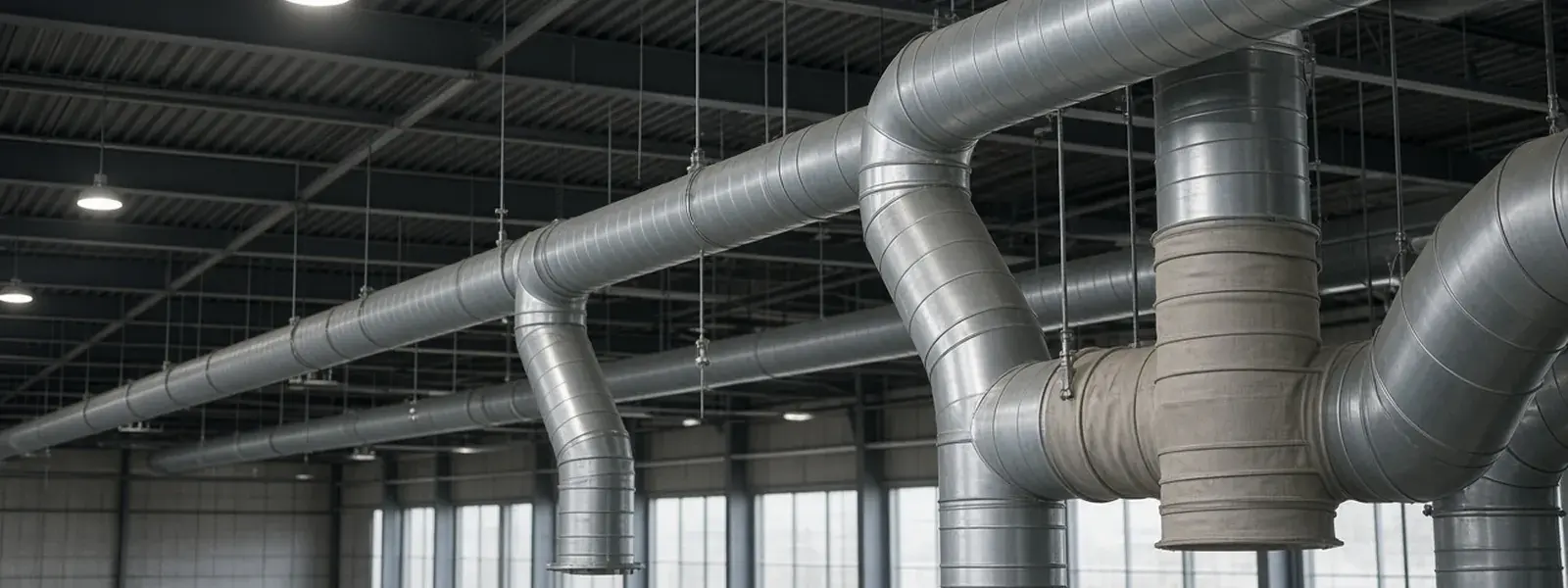
A rooftop that's healthy on the gauges and still starves a zone is a duct problem. High external static pressure, crushed flex, missing takeoffs, or a canvas connector that has torn will make a 10-ton unit act like a 5. Langley Quality Commercial HVAC measures, rebuilds, and adds commercial duct so the blower can actually hit the CFM on the data plate. Gloucester Industrial Estate and the 196 Street industrial belt are full of spiral mains hung over racks, with rectangular branches that were never balanced after the last tenant cut a hole.
We start with a static pressure traverse, not with a bigger motor. Turning the fan faster into a blocked trunk just makes more noise and more heat in the motor.
If the complaint is noise, a hot office, or a warehouse aisle that never sees supply, the answer is usually in the ceiling, not on the roof.
What is on the ticket
- External static pressure at the unit and a duct traverse where we can reach
- Spiral and rectangular main inspection for kinks, sag, and open joints
- Takeoff layout, tap-ins, and missing volume dampers
- Canvas connectors (flex connectors) at the unit and at equipment
- Flex run checks for crush, excessive length, and sharp bends
- Insulation, vapour jacket, and sweating on cold supply
- Fire damper and balancing damper condition
- New spiral or rectangular fabrication and hangers
- Return path, transfer, and grille free-area
- Airflow verification against the fan table after the work
When this call shows up
One office is hot and the grille is roaring
That's high velocity from a starved run or a damper that's slammed. ESP and a walk of the takeoffs find it faster than a new rooftop.
The unit is off the fan table on the data plate
If measured ESP is already above design, more charge or a new belt won't cool the floor. The duct is the job.
A tenant cut in extra grilles and the original zones died
Unplanned tap-ins steal the main. We redesign takeoffs and add dampers instead of letting every new hole rob the last one.
You hear a slap or a rattle at start-up
A torn canvas connector, a loose fire damper, or a main that was never guyed will move when the blower hits. That belongs in the ceiling before it tears further.
The warehouse aisle never sees air and the office is a wind tunnel
Throw, takeoff location, and a missing return path. Industrial spiral over racks needs a layout, not one long dump at the unit.
How we work the job
Measure ESP and compare it to the data plate fan table
Supply and return static tell us if the blower can hit design CFM. If it can't, we go looking in the duct, not in the refrigerant circuit.
Walk the mains, takeoffs, and flex
Crushed flex, sagging spiral, open joints, and tap-ins that were never dampered get mapped. We want the restriction, not a theory from the noisy grille.
Check canvas connectors, fire dampers, and the return path
A collapsed connector or a fire damper that has closed will choke the unit. A missing return in a closed office will do the same thing more quietly.
Fabricate and hang what is missing
Spiral, rectangular, takeoffs, and insulation get built to the layout, with hangers that won't sag over a Gloucester rack aisle. We don't tape a hope onto a crushed flex.
Verify airflow after the rebuild
ESP and grille checks come after the tools are down. The rooftop should land back on its fan table. If it doesn't, we keep going until the number makes sense.
Why this shop for commercial ductwork
We measure static before we blame the rooftop
A healthy circuit on a choked duct still delivers a hot suite. Gauges without ESP lie.
Industrial spiral is a different job from plaza flex
196 Street warehouses hang long mains over racks. Plaza suites hide short rectangular and flex. We build for the ceiling we're actually in.
Takeoffs get dampers
An undampered tap is how the last office on the run dies. We add control, not just more holes.
Canvas connectors are cheap insurance and we replace them when they are gone
A torn connector dumps air in the attic or the warehouse air and sounds like a failing unit.
We will say when the rooftop is innocent
If the cabinet is fine and the duct is the fault, you hear that. You shouldn't buy tons to fix a crushed trunk.
The Langley detail
Gloucester Industrial Estate and the 196 Street industrial strip are where commercial ductwork in Langley shows its age. Long spiral mains were hung for a warehouse that stored pallets. The next tenant put in offices along one wall, a paint booth, or a production line, and someone cut flex into the main wherever a grille was wanted. External static pressure climbed. The rooftop still looks busy on the roof. The far aisle gets nothing. We start those jobs with a static reading at the unit and a walk of the main. If ESP is already above the fan table on the data plate, adding a pulley turn isn't a duct design. It is a louder motor. The repair is takeoffs, a real trunk, and dampers that can send air to the end of the run.
Plaza and City of Langley suites fail in a tighter ceiling. Rectangular trunks sit on a short curb drop, then cheap flex runs to slot diffusers. Flex that's crushed in a joist bay, or run thirty feet with three tight bends, will roar at the grille and starve the coil. Canvas connectors at the unit dry out and tear, so the blower dumps supply into the ceiling plenum and the suite wonders why the rooftop 'has no capacity.' We replace the connector, shorten the flex, and add a proper takeoff with a damper. The packaged unit that everyone wanted to replace often lands back on its numbers once the air path exists again.
Return air is the half of ductwork nobody photographs. A closed office with a supply grille and no return, or a warehouse office that sealed the transfer, will pressurize the room and starve the unit. Filters load from the wrong direction. Doors whistle. We look at free area, transfer, and the return drop into the curb. A 10-ton cabinet on a 14-inch return isn't a mystery. It is a layout that was never finished. Fixing supply without fixing return is how you get a pretty spiral job and the same ESP you started with.
Fire dampers, volume dampers, and insulation are part of commercial duct, not extras. A fire damper that has been painted shut or knocked closed during a cable pull will choke a floor and look like a rooftop failure. Volume dampers that were never installed can't be balanced. Cold supply in a wet climate will sweat through a torn vapour jacket and stain a warehouse ceiling that has nothing to do with a curb leak. We call those items on the walkthrough. SMACNA-style hanging, joint sealing, and insulation are how the work stays in the ceiling instead of becoming a Tuesday callback.
Langley Quality Commercial HVAC treats commercial ductwork as the air path that makes the rooftop honest. If a Gloucester or 196 Street building has a roaring grille, a dead aisle, or a unit that's off its fan table, send a photo of the ceiling and the data plate. We will tell you whether this is crushed flex, a missing takeoff, a return that was never built, or a cabinet that's actually fine and shouldn't be replaced to fix a trunk.
Towns we cover
Work is dispatched from Langley across the Fraser Valley. See every municipality on the where we work page.