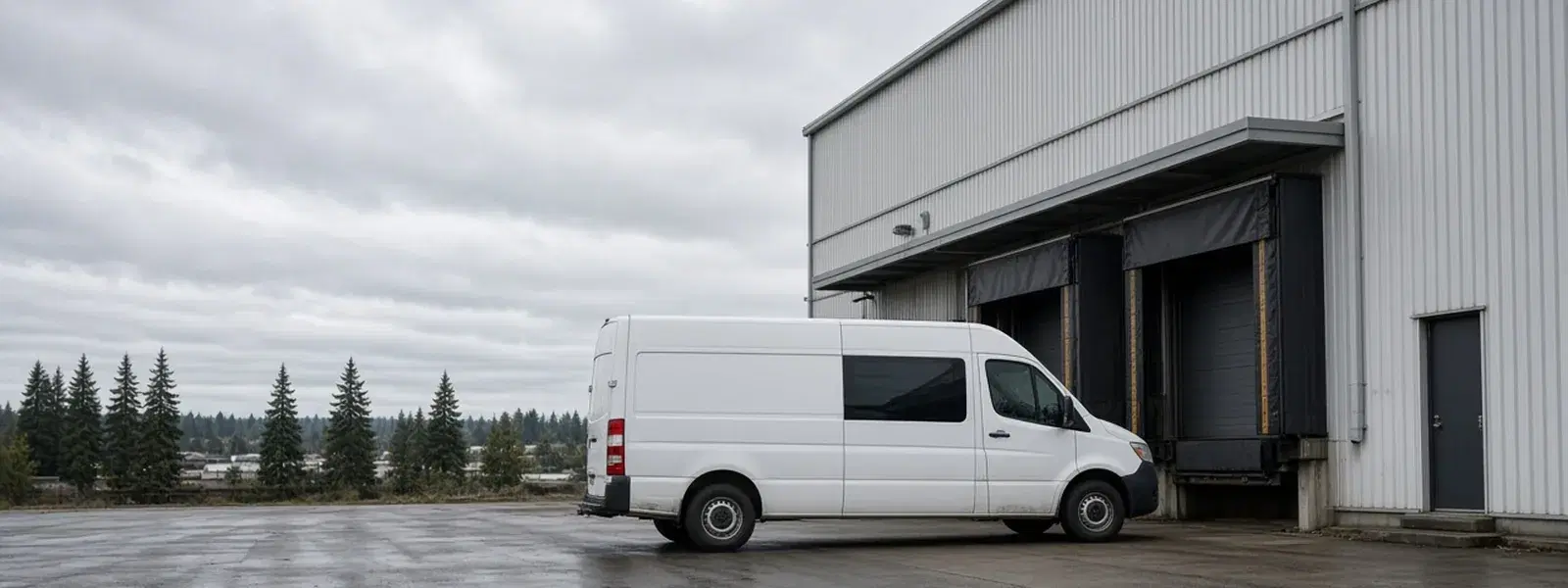
Langley Quality Commercial HVAC works warehouse roofs that plaza techs treat like a bigger 10-ton package. They are not. Gloucester Industrial Estates and the 196 Street belt are high-bay buildings with gas heat, dock doors, and a small office unit that gets all the complaints while the warehouse loses temperature at every outbound. If you manage a bay off Gloucester Way or a multi-tenant warehouse toward 196 Street, the roof is only half the system. The other half is hanging heaters, make-up air, and a building that goes negative every time someone props a door.
Langley's warehouse stock sits in two clusters that get lumped together and should not be. The 196 Street corridor, through the Northwest Langley industrial parks toward 88 Avenue and the Port Kells line, is older multi-tenant bays. Clear heights are often 18 to 22 feet. Heat is radiant tube or unit heaters. The office gets a packaged rooftop on a curb that has been leaking since the second owner. Gloucester Industrial Estates is the other end of the Township, off the 264 Street interchange, along Gloucester Way, 56 Avenue, 60 Avenue, and 272 to 274 Street. That is the Beedie-scale tilt-up: 26 to 30 foot clear, ESFR, long TPO, and gas heat sized for a bay that can swallow a plaza whole. Same municipality. Different roofs.
High-bay air doesn't behave like retail air. Heat rises. A thermostat on a warehouse office wall will read fine while the picking aisle at 4 feet is cold and the space under the deck is 8 degrees warmer. Destratification fans exist for that reason. A lot of Gloucester bays never got them, or the fans were left off after a complaint about 'draft.' Unit heaters aimed at the dock door lose the fight every morning. We measure at the work height, not at the mezzanine. Commercial heating repair on these sites starts with throw, mounting height, and whether the heater is short-cycling because the fan is fighting a 30 foot column of air with a 10 foot throw cone.
Gas heat is the default out here because winter recovery after a dock door is ugly on electric. Unit heaters, rooftop furnaces serving a front office, and make-up air furnaces on process or paint-bay exhaust all share a gas train, an inducer, and a heat exchanger that lives in dusty, sometimes wet, warehouse air. Igniters fail. Flame sensors film over. Pressure switches lock out when the vent is fighting wind across a wide Gloucester roof. A 'no heat' ticket that only checks the office RTU misses the three hanging heaters that actually hold the bay. We ask which space is cold before we climb.
Make-up air is the system tenants forget they have until the entry door won't close. Exhaust a welder, a process line, or a big washroom group without tempered replacement air and the building pulls from the docks. You get diesel smell in the office, failed door closers, and a heat complaint that sounds like a bad unit heater. The heater is running. It is heating incoming dock air. On Gloucester's newer tilt-up the make-up air cabinet is often on the roof next to the office package. On 196 Street stock it may be a through-wall or a rooftop furnace that hasn't been interlocked with exhaust since the last tenant. We check building pressure, not just gas pressure.
The roof itself is a heating problem. Long TPO and EPDM decks pond. Curbs sit in water. A leaking office RTU looks like a warehouse roof failure. Walk pads stop at the first unit and never reach the make-up air cabinet. Techs cut corners across the membrane and you get a callback that is now a roofing ticket. Warehouse roofs need a path to every gas appliance, condensate routed to a drain leader (not dumped on the membrane), and screens so the office condenser is not full of roof gravel. Gloucester's newer buildings are better about this than the 1980s 196 Street bays. Better is not the same as done. We still find foam-tape curbs and condensate dropped at the fan.
Office and warehouse are two climates on one meter. The office wants a packaged RTU or a split, filters, and a thermostat someone actually set. The warehouse wants air turnover, heat at the aisle, and a recovery plan for dock time. Mixing them (one rooftop serving both through a hole in the demising wall) is how you get an office that hits set point and a bay that never does, or a compressor that short-cycles because warehouse infiltration is pulling the office into continuous heat. We see that hack on older 196 Street multi-tenant more than on Gloucester's purpose-built tilt-up. Diagnosis means walking both spaces with a probe, not taking the shipping clerk's word that 'the heat is out.'
Abbotsford is the eastward cousin of this stock. Highway 1 past 264 Street runs you toward Mt Lehman, the YXX industrial parks, and warehouse roofs that use the same gas heat and make-up air logic. If your Langley bay feels like an Abbotsford airport warehouse, that is not an accident. The tilt-up recipe moved up the valley. Commercial heating repair that works on a Gloucester unit heater is the same trade on a Marshall Road bay: combustion, venting, throw, and building pressure. The difference is Sumas humidity and process washdown on the Abbotsford side. We still treat them as related roofs, not as a generic 'Valley warehouse' blur.
What we actually open on a heating call out here is specific. Gas valve, igniter, flame sensor, inducer amp draw, pressure switch, vent termination, and a look at the heat exchanger with a camera or a mirror when the symptoms say so. On unit heaters we check mounting, discharge cone, and whether the hangers have let the unit tilt toward the heat exchanger drain. On rooftop furnaces we add condensate, cabinet leaks, and whether the outdoor-air intake is pulling rain. We don't start with a new thermostat. We start with fire, vent, and air.
Unoccupied hours are where Gloucester buildings lose money and comfort at the same time. A bay that sets back to 10 degrees overnight on a January Friday won't be ready at 6 a.m. if the heaters are undersized for recovery or if half of them are locked out. Night setback is fine. Recovery math is not optional. We have walked into Monday mornings where two of six unit heaters were in lockout since Saturday and the remaining four were glowing trying to catch up with every dock door. That is a maintenance and staging problem. It is also why a single 'the heat is down' call can be four failed igniters you didn't know about.
Warehouse roofs need a short list, and it is not pretty. Safe access and walk pads to every appliance. Condensate piped off the membrane. Curb gaskets that still compress. Gas heat that has had a combustion test, not just a filter toss. Make-up air interlocked with exhaust. Destratification if the clear height is over 24 feet and people work at grade. An office RTU that is not asked to heat the warehouse through a missing panel. Screens on condensers. A label on the wall that says which breaker and which gas valve feed which heater. Gloucester's better buildings have some of that. The 196 Street belt often has none of it.
If your bay is cold, your office is leaking at the curb, or the entry door is sucking air from the docks, that is warehouse HVAC, not a plaza tune-up. Langley Quality Commercial HVAC works Gloucester Industrial Estates and the 196 Street roofs as high-bay gas jobs. Tell us the park, the clear height, and whether the complaint is the office, the aisle, or both. We'll start with the heaters and the air, not with a guess at the thermostat.