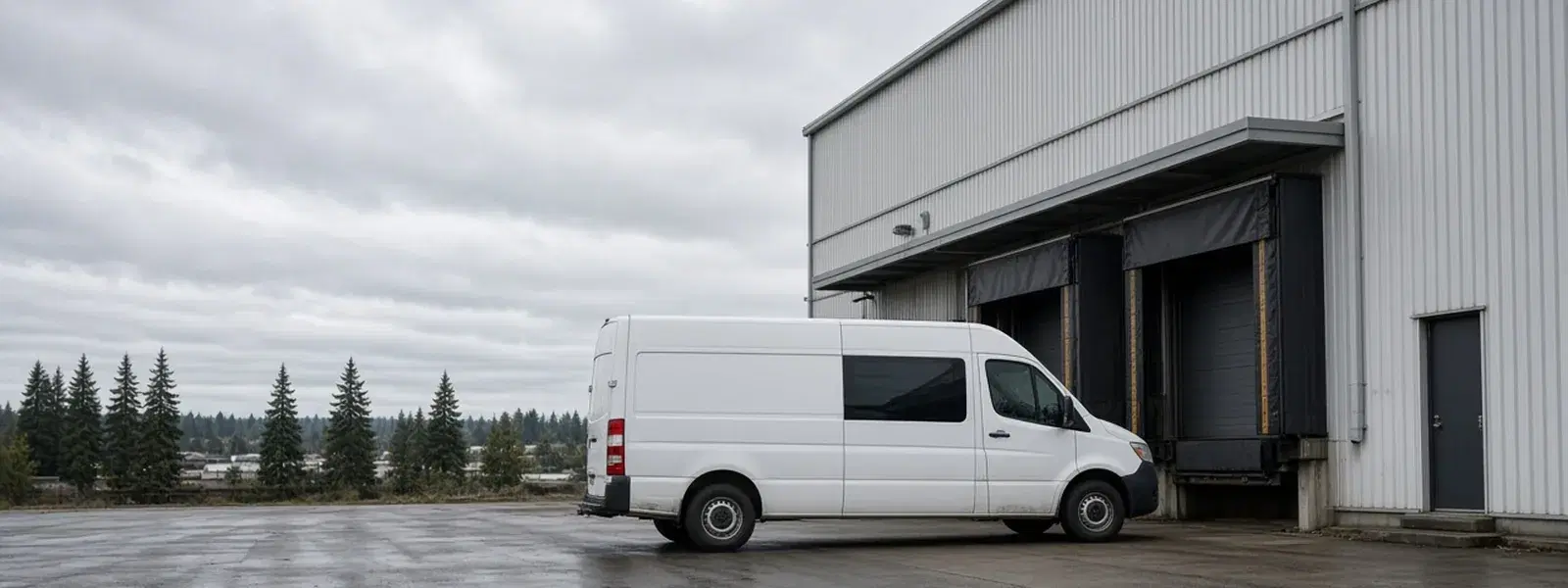
Langley Quality Commercial HVAC works Surrey commercial HVAC the same week we work Langley jobs, because Port Kells and the Fraser Highway industrial belt sit on our doorstep. Surrey is not one commercial pattern. It is a stack of them, and the equipment on each stack fails in a different way.
Port Kells grew up against Highway 1 and the Golden Ears Industrial Centre on 96 Avenue. You get 18 to 22 foot clear bays, radiant-tube heat, dock doors that never stay shut, and a small office RTU on a curb that has been sitting in rain since the building opened. Newton is another job entirely. King George Boulevard and 72 Avenue are older plazas, restaurant grease on package units, and tenant turnover that leaves economizers stuck and filters packed.
Then the Cloverdale edge along 176 Street (Highway 15) and Fraser Highway keeps adding tilt-up next to tired stock. That mix of new warehouse roofs and 1980s cabinets is what we actually see when a Surrey unit goes down.
Why Surrey buildings call
Port Kells sits in Highway 1 weather
The 192 Street on-ramp and the 94 to 96 Avenue industrial grid take the full Fraser Valley rain load. Cabinet seams, curb gaskets, and condenser fans on those roofs don't get a dry season long enough to recover.
Newton plazas still run kitchen RTUs from the 90s
Scott Road and King George strips put grease-laden exhaust beside the same curb as the dining-room package unit. Coils load up, drains slime over, and the compressor short-cycles long before anyone calls.
Cloverdale's industrial edge keeps growing into Langley
Highway 15 and Fraser Highway are filling with new distribution roofs while older shops on 64 Avenue still heat with hanging unit heaters and a tired 5-ton office package. Both ends need different service.
Solutions we run in Surrey
- Commercial HVAC Repair
- Rooftop Unit Repair
- Rooftop Unit Replacement
- Commercial AC Repair
- Commercial Heating Repair
- Commercial HVAC Installation
- Commercial HVAC Maintenance
- Packaged Rooftop Units
- Make-Up Air Units
- VRF / VRV Systems
- Commercial Ductwork
- Emergency Commercial HVAC
The Surrey stock
Port Kells still runs on a split generation of buildings. South of 96 Avenue you'll find 1980s multi-tenant bays with 18 to 20 foot clear height, radiant-tube heat hung off the joists, and a small rooftop package serving the front office only. Warehouse air is whatever the tube heaters and open dock doors decide. Newer stock in the Golden Ears Industrial Centre pushed clear heights toward 22 feet and added unit heaters with more throw, but the office RTU is still a 5 to 10 ton curb-mounted package with foam-tape that has sat in Fraser Highway rain for a decade. When that curb gasket fails, the leak shows up in the reception ceiling, not on the warehouse slab.
Highway 1 changes how those units live. Port Kells roofs take road grit, idling truck exhaust from the 192 Street interchange, and the same southwesterly rain that soaks Langley. Economizer dampers seize with a mix of moisture and brake dust. Enthalpy sensors drift. A unit that should be pulling free cooling on a 12 degree spring day sits on mechanical cooling because the outdoor-air damper is rusted shut. We see that pattern on the older 19214-area stock more than on brand-new tilt-up, because the cabinets and the linkages have had 20 winters to lock up.
Newton commercial is a different mechanical world. The plazas along King George, 72 Avenue, and 88 Avenue are low-slope retail with 7.5 to 20 ton packaged RTUs parked over restaurants, clinics, and grocers. Kitchen make-up air fights the dining-room unit on the same roof. Grease settles on condenser fins and on the heat exchanger intake. Condensate pans grow algae in the shoulder seasons. A lot of these buildings changed tenants three times and nobody moved the thermostat or rebalanced the supply. You get hot corners, iced coils, and a compressor that has been short-cycling since the last lease.
Cloverdale's east edge is the Surrey job that feels most like Langley. Highway 15 (176 Street) and Highway 10 (56 Avenue / 64 Avenue) carry shop and light-industrial stock toward the Township line. Some of it is new tilt-up with 25 foot clear and gas unit heaters. Some of it is older wood-frame commercial around the fairgrounds and the 176 Street corridor, still running a single package unit and a couple of wall-hung heaters. The new roofs pond after a Fraser Highway downpour. The old roofs leak at every curb. We treat them as two inventories that happen to share a postal city.
Surrey's warehouse count keeps jumping, and that is not a slogan. Campbell Heights is a different submarket, but the Port Kells and Fraser Highway belt alone has added long TPO roofs that need walk pads, condensate routing that actually reaches a drain, and gas heat that can recover after a dock door stays open through a lunch rush. Rapid growth also means a lot of units were set and never commissioned. Superheat and subcooling were never recorded. External static pressure was never checked against the fan table. Those buildings call in the second winter, when the belt glazes and the heat exchanger starts to crack from short-cycling. Call Langley Quality Commercial HVAC if a unit is down.